Gear Reviews
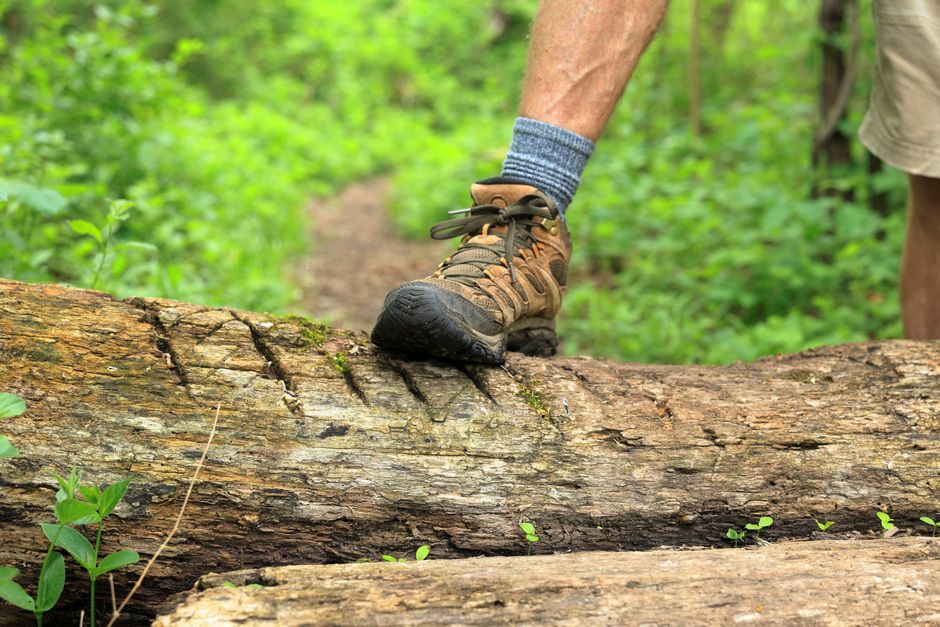
Buying your first real pair of hiking boots feels like standing in front of a wall of near-identical brown shoes while a salesperson asks questions you don't know how to answer. Do you need waterproofing? How stiff should the sole be? What does 'last' even mean? The good news is that most of the decision comes down to three things: where you hike, how much weight you carry, and how the boot fits your particular foot. Get those right and you can ignore most of the marketing noise.
Start with terrain and load. If your hikes are mostly well-maintained day trails with a light pack, a low-cut or mid-cut boot with a flexible sole will feel comfortable immediately and won't tire your legs. If you're carrying a multi-day pack or scrambling over talus and roots, you'll want a stiffer midsole, a more substantial shank, and a higher cut that supports your ankle when the ground tilts unexpectedly. The boot should match the worst day you realistically expect, not the average one.
Most boot problems people blame on the boot are actually fit problems. Your feet swell over the course of a hike, sometimes by half a size, so you want roughly a thumb's width of space between your longest toe and the front of the boot. When you lace up and kick your toe into the floor, your toes should not jam. Heel lift should be minimal, no more than a few millimeters, and a proper lacing technique can fix a lot of it: use a heel-lock or surgeon's knot around the ankle to keep your foot seated.
Width matters as much as length. Many brands offer wide versions, and if you have a broad forefoot or a high instep, don't force yourself into a standard width because the color is nicer. Try boots on late in the day when your feet are already a bit swollen, wear the socks you actually hike in, and walk around the store, up and down any ramp they have. A boot that pinches in the shop will be unbearable at mile eight.
Full-grain leather is durable and molds to your foot over time but is heavier and needs breaking in. Synthetic uppers are lighter, dry faster, and require almost no break-in, which makes them a great choice for beginners and wet climates. Waterproof membranes keep rain and puddles out but also trap sweat, so in hot, dry conditions a breathable non-waterproof boot often dries faster after a stream crossing than a waterproof one drains.
Break in new boots gradually: short walks around the neighborhood, then a couple of easy trails, before you commit to a big day. Pair them with merino or synthetic socks, never cotton, and consider replacing the stock insole with something that matches your arch. Finally, take care of them. Rinse off mud, let them air dry away from direct heat, and reapply the appropriate conditioner or waterproofing treatment. A well-fitted, well-maintained boot can last many seasons, and by then you'll know exactly what you want next time.
